Why Your “Chaotic” Life Might Actually Be a Beautifully Wired Brain
Introduction
What if everything you've been told about yourself, too scattered, too intense, too much. Was never actually true? What if the chaos wasn't a character flaw at all, but a brain doing its absolute best without a single instruction manual? That's the question sitting at the heart of Beautifully Wired and Late to Know It by Yasmin Wheatley, a memoir about receiving an ADHD and OCPD diagnosis at 52, and the profound, gut-wrenching, ultimately liberating experience of finally understanding why your whole life looked the way it did.
It's a book about grief and relief arriving in the same breath. About looking back at decades of marriages, unfinished courses, impulsive decisions, and spectacular adventures, and realising none of it was recklessness. It was just a beautifully wired brain, running at full volume, with no map.
If you've ever been called too much. If you've started everything and finished almost nothing. If you've wondered why stillness feels like slow suffocation while everyone else seems perfectly fine. This post is for you. We're breaking down the reality of late diagnosis, what the aftermath actually looks like, and why your so-called chaos might be the most extraordinary thing about you.
The Exhaustion of the Unmedicated Hustle
Here's what nobody tells you about living with undiagnosed ADHD: you don't know you're doing it.
You just think this is how life works. You think everyone's brain runs this fast, this loud, this relentlessly.
You think the 4am starts and the obsessive cleaning and the signing up for courses you'll never finish, and the businesses launched on a Tuesday afternoon, you think that's just personality.
Just being a lot of fun.
Just being you.
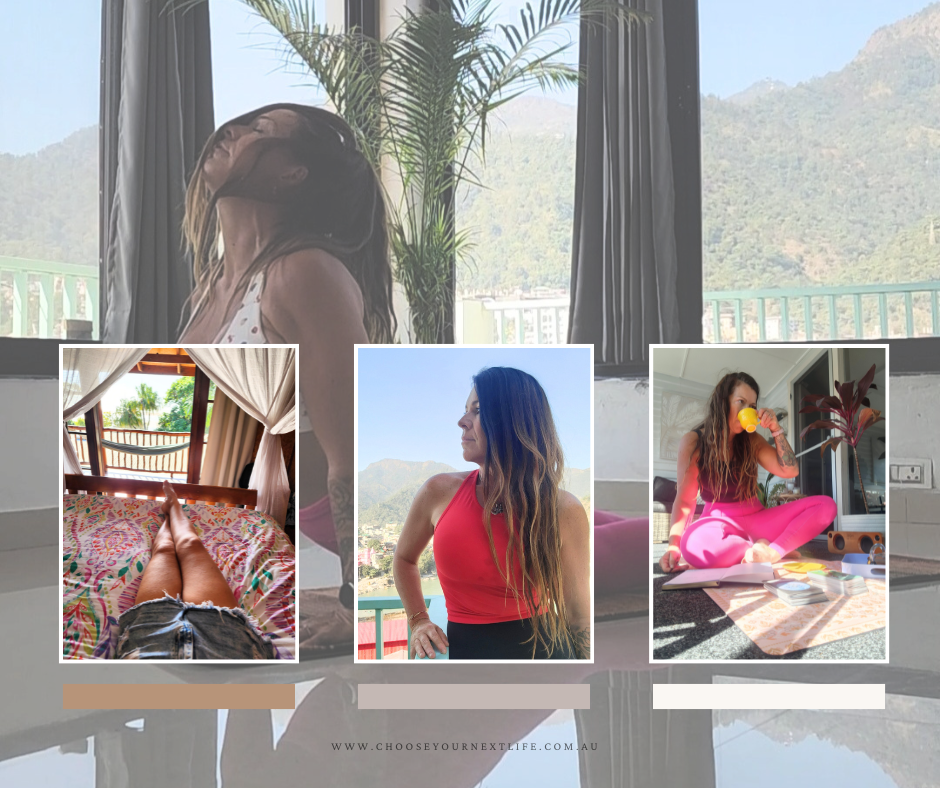
In Beautifully Wired, Yasmin describes the period after leaving a corporate role when her brain, suddenly without the container of work to hold it, came completely off the rails.
Up at 4am. Pilates, yoga, swimming, running, walking, all in the same day, every day.
A cleaning business.
A coaching business.
A marathon.
Then India, because if you love yoga, you should obviously go to where yoga was born, and she was on a flight three weeks later.
This wasn't recklessness.
This was a brain that had never been diagnosed, never been given tools, doing the only thing it knew how to do. Move. Chase. Begin.
The exhaustion of the unmedicated hustle isn't just physical.
It's the weight of constantly starting over. Of pouring everything into the electric beginning of something.
A new business, a new relationship, a new obsession, and then watching the dopamine drain away and feeling that familiar restlessness creep back in.
It's the shame of the abandoned folders and the unused logins and the courses you told people you were doing and then quietly never mentioned again. For decades, that shame gets filed under laziness. Under lack of discipline. Under something being fundamentally wrong with you.
It takes a diagnosis to understand it was never any of those things.
The Day Everything Makes Sense
There is a very specific kind of crying that happens in a chemist car park after a $2,000 psychiatrist appointment.
Yasmin describes it in the book with the kind of raw, unvarnished honesty that makes you feel like you're sitting right there with her.
She'd fought the idea of a diagnosis for two years. Partly because she didn't want a label. Partly because she genuinely loved who she was, the chaos, the energy, the full-throttle way she moved through the world. And then she sat across from a psychiatrist who told her she had ADHD. And OCPD.
Two diagnoses. She hadn't even known she had one. She drove to the chemist. Collected her medication. Drove home. And fell apart.
For a week she grieved, properly, deeply, completely.
She grieved for the girl who never knew. For the degree she might have finished. For the marriages that might have looked different. For the money that haemorrhaged through decades of impulsive decisions she now understood weren't impulsive at all. They were a brain chasing dopamine without a single framework for why.
The grief was real and it deserved to be felt fully.
But underneath it, something else was beginning to surface. Relief. The specific, bone-deep relief of finally having a name for all of it.
This is what late diagnosis looks like for so many women, not a clean, triumphant moment of clarity, but a complicated tangle of joy and grief arriving simultaneously.
The relief that there was a reason. The grief that nobody found it sooner.
Both things completely, devastatingly true at once.
Why Women’s ADHD Gets Missed for Decades
ADHD in women rarely looks like the textbook version.
It doesn't always look like a child who can't sit still in a classroom.
In women, particularly women of Yasmin's generation.
It looks like high energy and big personality.
It looks like being the chaotic, hilarious, unpredictable one that everyone loves.
It looks like overachievement in some areas and spectacular abandonment in others.
It looks like too much personality, not a neurological difference.
The masking is extraordinary.
Women with undiagnosed ADHD become expert performers, holding it together on the outside while the inside runs at a frequency nobody else can hear.
They develop workarounds. They use structure where they can find it, the rigid framework of competition prep, the obsessive cleaning routine, the washing machine nobody is allowed to touch, as a way to manage a brain that feels completely uncontrollable everywhere else.
They look functional. They look fine. They look like they're just a lot. And so nobody looks closer.
Not teachers. Not doctors. Not the people who love them.
Because the chaos is charming and the energy is infectious and there's no obvious crisis to point to, just a woman who starts everything and finishes almost nothing, who loves hard and moves on fast, who has been married six times and started approximately every business and gone to India on three weeks' notice.
The book makes this point with quiet devastation: the very traits that made Yasmin magnetic.
The intensity, the all-in energy, the way she arrived in every room like a force of nature, were the same traits that kept anyone from looking underneath. It wasn't until she stopped working, until the container of structure fell away, that the unmanaged brain became impossible to ignore.
Reframing the “Flaws” as Features
Here's the reframe that Beautifully Wired offers, and it's not a small one.
Every trait you've spent decades apologising for?
The hyperfixations that consumed you and then evaporated.
The relationships you entered like a hurricane.
The businesses you launched with extraordinary infrastructure and then quietly abandoned.
The courses, the cookbooks, the camera that never left its box.
None of it was laziness. None of it was recklessness. None of it was a character flaw.
It was a brain wired for novelty, for intensity, for the electric beginning of things, doing exactly what it was built to do, without anyone ever explaining the wiring.
The book doesn't ask you to love every consequence of that wiring.
Yasmin is honest about the ADHD tax, the financial cost, the relational damage, the things she carries.
She doesn't wrap it in a bow and call it all beautiful.
But she does something more useful:
she separates the brain from the shame. She shows you that understanding why you work the way you do doesn't erase the past, but it does change the story you tell about it.
The quick win here is deceptively simple, and you can do it right now.
Take one thing you've always labelled a flaw.
One pattern you've been ashamed of.
Write it down. Then ask: what was my brain actually trying to do? Was it chasing stimulation? Managing overwhelm? Seeking the dopamine hit of a new beginning?
You don't need a diagnosis to start asking that question. You just need the willingness to look at yourself with a little more curiosity and a little less judgment.
That shift, from flaw to function, is where everything in this book begins.
The Map You Never Had
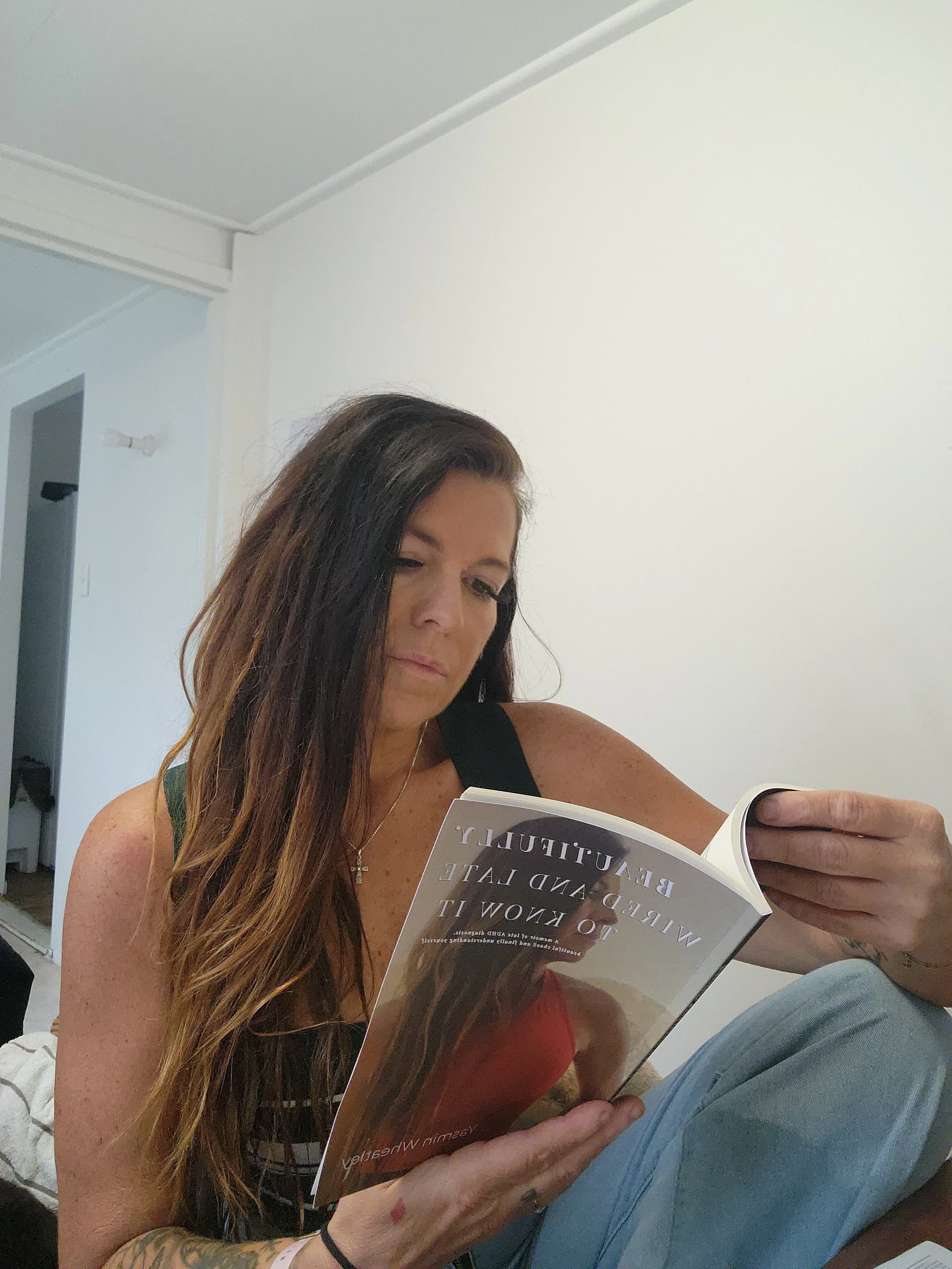
Yasmin describes her diagnosis as finally getting a map. Not a map that changes where you've been, but one that makes sense of the terrain.
The grief of late diagnosis is real. The years lived without understanding. The decisions made without context. The version of your life that might have looked different with an earlier answer. That grief deserves space.
The book holds it without rushing past it, because rushing past grief is exactly what an undiagnosed ADHD brain does, and this time, Yasmin chose to stay.
But the map changes everything going forward. It changes how you talk to yourself about the abandoned projects and the impulsive decisions. It changes what you ask for and what you build. It changes the story, not from chaotic to calm, but from broken to beautifully wired.
Beautifully Wired and Late to Know It is that map in book form.
It's not a clinical guide or a list of coping strategies.
It's a woman who lived fifty-two years without the answer, found it, grieved it, and then turned around to hold out her hand to every woman still searching.
The frameworks, the reframes, the radical self-acceptance, they're all here, woven through stories so specific and so honest that you'll find yourself in them whether you have a diagnosis or not.
How old were you when you finally got your map? Or are you still looking for it?
Share this post with a woman in your life who needs to hear she was never broken and subscribe to this series for more from the world of Beautifully Wired.
Conclusion
Your chaos was never the problem.
It was a brain doing its absolute best with no map, no diagnosis, and no one explaining that the way it worked was actually extraordinary.
That's the core truth of Beautifully Wired and Late to Know It, and it's one that takes an entire life, honestly told, to fully land.
Yasmin Wheatley doesn't offer a tidy self-help framework or a five-step fix.
She offers something rarer: her whole, unvarnished story, held up like a mirror, so that somewhere in its reflection you might finally see yourself clearly.
If any part of this post felt like recognition. If the unmedicated hustle, the grief of the late diagnosis, or the reframe from flaw to feature resonated somewhere deep, the book is where the full journey lives.
Not just the diagnosis, but everything that came before it and everything that became possible after.
It is, as Yasmin would say, a lot. In the very best way.
Found this helpful? Share it with a woman who needs to read it 💛
Copy the link: chooseyournextlife.com.au/theblog/beautifully-wired-brain"
